How to Assess Supplier Security
Your security is only as strong as your weakest supplier. A breach at a vendor with access to your systems or data can be just as devastating as a direct attack. Here's how to systematically evaluate and manage supplier security without creating excessive bureaucracy.
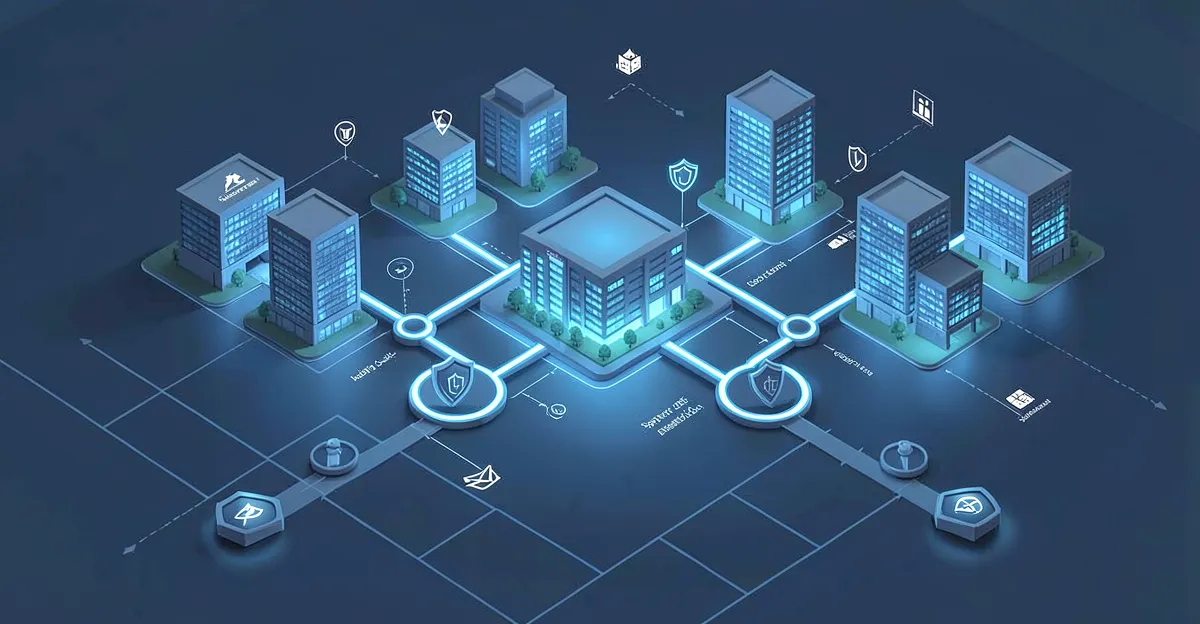
Supplier security is a crucial part of NIS2 directive . Supplier risks can lead to ransomware attacks through your supply chain. Start with a risk assessment to identify your vulnerabilities.
Why Supplier Security Matters
Supply chain attacks are increasingly common because:
Easier entry point
Attackers target less-secured suppliers to reach their real target
Trusted access
Suppliers often have privileged access to your systems and data
Shared responsibility
You're still liable for breaches caused by your suppliers under GDPR
NIS2 requirement
Supply chain security is explicitly required for compliance
Insurance requirements
Cyber insurers increasingly ask about third-party risk management
Business continuity
A supplier breach can disrupt your operations even without direct attack
Recent Supply Chain Breaches
These real-world incidents show why supply chain security matters:
IOK Waste Authority, Belgium (May 2026)
What happened: An attack on an external IT supplier that ran the control and weighbridge systems for the Beerse and Merksplas recycling parks (operated by the Kempen inter-municipal waste authority IOK) knocked the parks offline. IOK's own systems were not breached.
Impact: The recycling parks could not operate normally and systems were taken offline as a precaution. A Belgian public body was disrupted entirely through a supplier it never controlled directly.
Lesson: Your security is only as strong as your suppliers'. NIS2 makes supply-chain risk management an explicit obligation: list the suppliers who can take your business down, and ask each about multi-factor authentication, tested backups, and how fast they will tell you if they are breached.
Ledger Crypto Wallet (2024)
What happened: Attackers compromised a former employee's npm account to inject malicious code into Ledger's JavaScript library used by cryptocurrency apps.
Impact: Affected dApps using the library could drain user wallets. Estimated $600K stolen before detection.
Lesson: Monitor third-party code dependencies. Former employee accounts should be immediately revoked.
Clop Ransomware - Oracle Zero-Day (2025)
What happened: Clop exploited a zero-day vulnerability in Oracle software to attack organizations through their managed file transfer systems.
Impact: Hundreds of organizations affected. Attackers exfiltrated data without deploying ransomware.
Lesson: Patch critical vendor software immediately. Monitor vendors' security bulletins. Have incident response plans for supplier breaches.
ESA Data Breach (2025)
What happened: European Space Agency suffered a breach through a third-party contractor, exposing sensitive program data.
Impact: Confidential space program data potentially exposed. Investigation ongoing across multiple countries.
Lesson: Apply same security standards to contractors as internal systems. Segment contractor access.
Under Armour / MyFitnessPal (2024)
What happened: Breach exposed 72 million customer records through compromised third-party data processing.
Impact: Massive customer data exposure including emails, usernames, and hashed passwords.
Lesson: Audit data processors thoroughly. Minimize data shared with third parties.
The 5-Step Supplier Security Process
Follow this practical process to assess and manage supplier security:
Step 1: Inventory Your Suppliers
Before you can assess risk, you need to know who your suppliers are and what access they have:
- List all vendors, contractors, and service providers
- Document what data each supplier can access
- Identify which suppliers have system access (remote, VPN, admin)
- Note any subcontractors your suppliers use (fourth-party risk)
- Record the business function each supplier supports
- Include cloud services, SaaS tools, and IT providers
Step 2: Categorize by Risk Level
Not all suppliers need the same level of scrutiny. Categorize based on access and impact:
- Critical: Access to sensitive data or critical systems (e.g., cloud provider, payroll, ERP)
- High: Process personal data or have network access (e.g., HR software, IT support)
- Standard: Limited access, no sensitive data (e.g., office supplies, cleaning)
- Consider data sensitivity: customer data, financial info, IP
- Consider access level: admin rights, remote access, physical access
- Consider business impact: what happens if they're compromised?
Step 3: Send Security Questionnaires
For Critical and High-risk suppliers, gather security information:
- Do they have security certifications? (ISO 27001, SOC 2, CyberFundamentals)
- Do they have a security policy and incident response plan?
- How do they protect data at rest and in transit?
- What access controls do they use? (MFA, least privilege)
- Do they conduct employee security training?
- When was their last security assessment or penetration test?
- Do they have cyber insurance?
Step 4: Set Contract Requirements
Formalize security expectations in your contracts:
- Data Processing Agreement (DPA) for any supplier handling personal data
- Breach notification clause: notify within 24-48 hours
- Right to audit: ability to assess their security upon request
- Security standards: minimum requirements they must maintain
- Subcontractor approval: require notification of any subcontractors
- Liability and indemnification for security incidents
- Termination rights: ability to exit if security standards aren't met
Step 5: Implement Ongoing Monitoring
Supplier security isn't one-and-done. Establish ongoing oversight:
- Annual review for critical suppliers, every 2-3 years for standard
- Monitor for security news about your suppliers
- Track certification renewals and expiration dates
- Include suppliers in your incident response plan
- Establish a communication channel for security issues
- Review access regularly - revoke when no longer needed
- Update risk categorization as relationships change
Sample Security Questionnaire
Use these key questions to assess supplier security posture:
Governance & Compliance
- Do you have a dedicated information security role or team?
- What security certifications do you hold? (ISO 27001, SOC 2, CyberFundamentals)
- Do you have a documented information security policy?
- When was your last external security audit?
Technical Controls
- Do you require multi-factor authentication for all users?
- How do you encrypt data at rest and in transit?
- Do you have endpoint protection (EDR/antivirus) on all devices?
- How do you manage and patch vulnerabilities?
Access & Data
- How do you implement least privilege access?
- What is your employee offboarding process for access removal?
- Where is our data stored and processed (geographic location)?
- Do you use subcontractors who will access our data?
Incident Response
- Do you have a documented incident response plan?
- What is your breach notification timeframe?
- Have you experienced any security incidents in the past 3 years?
- Do you have cyber insurance?
Key Certifications to Look For
These certifications provide assurance about a supplier's security maturity:
ISO 27001
International standard for information security management systems (ISMS)
Best for: Any supplier handling sensitive data or with significant access
SOC 2
Service Organization Controls focused on security, availability, processing integrity, confidentiality, and privacy
Best for: Cloud services, SaaS providers, data centers
CyberFundamentals
Belgian CCB framework with Basic, Important, and Essential levels
Best for: Belgian suppliers, especially SMEs
ISAE 3402
Assurance on service organization controls (often combined with SOC 2)
Best for: Financial services providers, audited environments
Essential Contract Security Clauses
Include these security provisions in supplier contracts:
Data Processing Agreement (DPA)
Required under GDPR for any supplier processing personal data. Defines roles, purposes, and security measures.
Article 28 GDPR compliant DPA with specified technical and organizational measures
Breach Notification
Supplier must notify you promptly of any security incident affecting your data.
"Supplier shall notify Client within 24 hours of discovering any security incident..."
Security Standards
Minimum security controls the supplier must maintain.
"Supplier shall maintain ISO 27001 certification or equivalent security controls..."
Audit Rights
Your right to assess supplier security, directly or through a third party.
"Client may audit Supplier's security controls annually with 30 days notice..."
Subcontractor Approval
Control over who else handles your data.
"Supplier shall not engage subcontractors without prior written consent of Client..."
Termination for Breach
Right to exit if security standards aren't met.
"Client may terminate immediately upon material security breach..."
Supplier Risk Assessment Matrix
Use this matrix to determine the assessment depth needed for each supplier:
| Access Level / Data Sensitivity | Low | Medium | High |
|---|---|---|---|
| High | High | Critical | Critical |
| Medium | Standard | High | Critical |
| Low | Minimal | Standard | High |
Common Mistakes to Avoid
Treating all suppliers the same
Fix: Risk-based approach: focus effort on critical suppliers, streamline for low-risk ones
One-time assessment only
Fix: Annual reviews for critical suppliers, track certification expirations
Accepting questionnaire responses at face value
Fix: Request evidence: certificates, audit reports, policy documents
Ignoring fourth-party risk
Fix: Ask about subcontractors and their security practices
No security clauses in contracts
Fix: Add security requirements to all new contracts, renegotiate at renewal
Example: Supplier Risk Register
Here's what a typical supplier risk assessment looks like:
| Supplier | Type | Access | Risk | Certification | Status |
|---|---|---|---|---|---|
| CloudCorp ERP | ERP/Accounting | Financial data, invoices | Critical | ISO 27001, SOC 2 | Compliant |
| IT Support Partner | Managed IT | Admin rights, all systems | Critical | CyberFundamentals Important | Review due |
| HR Software | SaaS | Employee data, payroll | High | ISO 27001 | Compliant |
| Marketing Agency | Service | Website CMS, analytics | Standard | None | Questionnaire sent |
Compare tools that can help with this in our best NIS2 software comparison.
Streamline Supplier Security Management
Easy Cyber Protection helps you track supplier assessments, manage questionnaires, and maintain your supplier risk register. Stay on top of third-party risk without spreadsheet chaos.
Frequently Asked Questions
How many suppliers should we assess?
Focus on critical and high-risk suppliers first - typically 10-20 for most SMEs. These are suppliers with access to sensitive data or critical systems. For low-risk suppliers (office supplies, basic services), a lightweight approach or no assessment is appropriate.
What if a supplier refuses to complete our questionnaire?
This is a red flag. Ask if they have certifications or audit reports they can share instead. If they refuse any assessment, consider whether you can limit their access or find an alternative supplier. For critical suppliers, security assessment should be a requirement.
How often should we reassess suppliers?
Critical suppliers: annually. High-risk suppliers: every 1-2 years. Standard suppliers: at contract renewal or every 3 years. Also reassess when the supplier has a security incident, changes ownership, or when you change the scope of data/access they have.
Do we need a formal supplier security policy?
For NIS2 compliance, yes. You need documented requirements for supply chain security. Even without compliance requirements, a simple policy helps ensure consistency. It can be a single page outlining your assessment criteria and contract requirements.
What about small suppliers without certifications?
Many SME suppliers won't have formal certifications. Use questionnaires to understand their actual practices. Focus on key controls: do they use MFA? Do they encrypt data? Do they have backups? A small supplier with good practices may be lower risk than a large one with poor security culture.